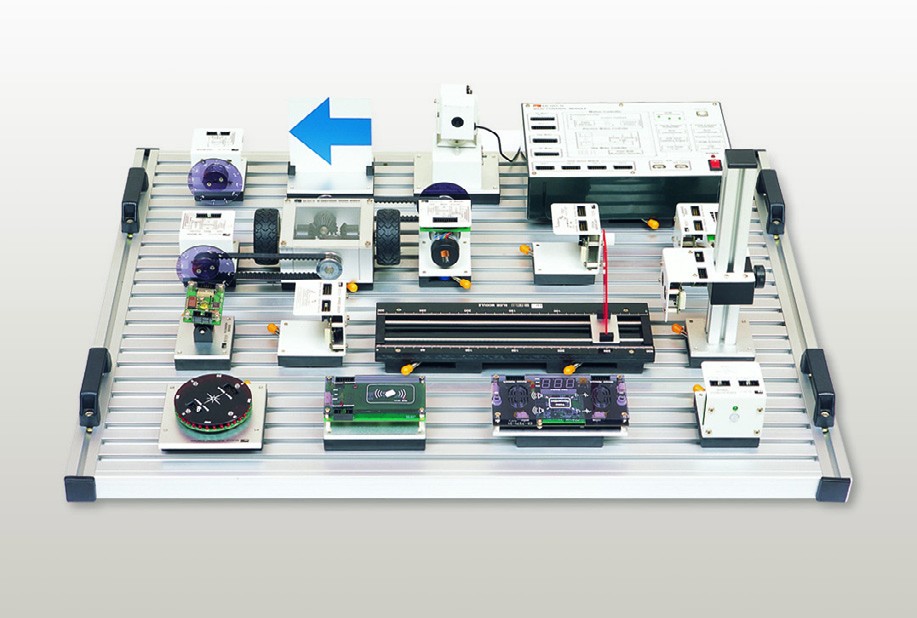
Robot Assembly Kit Trainer ED-7271

Code: ED-7271


Datasheet PDF, 1.24 Mb

Description

EXPERIMENTS

  • Understanding of the Artificial Intelligence Robot
  • Classification of technologies applied to the Artificial Intelligence Robot
  • Basic structure, mechanism and strength and weakness of the robot
  • Principle and practice of  the sensor modules
  • Types and characteristics of  the actuators(DC Servo Motor, Step Motor, RC Motor)
  • Image processing experiments using the CCD Image Sensor(Digital Image Processing theory and pattern/color recognition principles and experiments)
  • Applied experiments using the Intelligent Robot Kit


Features:

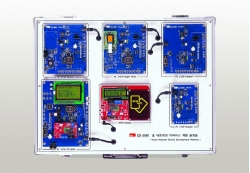
  • 10 types of sensors, 3 types of actuator modules and 4 types of application modules essential for the intelligent robot
  • System structure for seizing the essence of artificial intelligence robots
  • Enriched examples for the beginning level to an advanced level in the robot class
  • Easy to mount modules by the clamping device
  • USB high speed(480Mbps) interface
  • Extensive learning for the sensors being used in the field of Ubiquitous and Home Network
  • Image processing practice using USB Camera
  • Application experiment using MSRDS(Microsoft Robotics Developer Studio)


More products ED

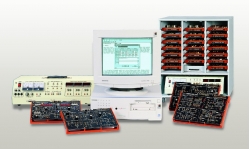
ASSEMBLING ROBOT TRAINER ED-7300

• Disassembly and assembly practices for the robot actuators
• Utilization of a robot being used in the industry, so to apply a job site after graduation
• Simulation software provided to make assembly or disassembly easily
• Enables basic operation and testing practices on the assembled unit using a controller


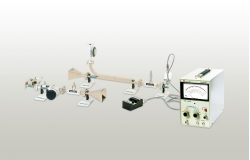
NEW & RENEWABLE ENERGY TRAINER ED-9720

• Conversion experiments on the produced energy(power production/processing)
• Characteristics of Solar Cell module’s voltage and current
• Alarm beep for wrong wire placement
• Voltmeter and ammeter as included for measuring AC and DC
• Control by PC and waveform and graph output


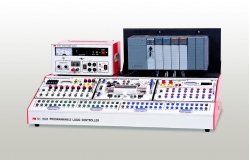
UNIVERSAL PLC TRAINER ED-UPLC

• Docking System architecture separating the main body from PLC modules
• Various types of Programmable Logic Controller experiments
• Modular structure for convenient storage and mobility
• Built-in multi connection device compatible with world’s famous PLC brands


FLEXIBLE MANUFACTURING SYSTEM ED-FMS1

• Stores at the cell designated by crane
• Stores according to color and materials
• Selecting and taking at the time of cell is full


EMBEDDED SOFTWARE DESIGN PLATFORM ED-255EK

• Basic to advanced learning courses for Embedded Linux
• Intel PXA255(400MHz) high-performance microprocessor
• 6.4TFT LCD, Ethernet 2port, Serial 3port, PCMCIA/CF/MMC interfaces
• FPGA Chip(Altera Cyclone 120,000Gate) mounted for SoC experiments
• Reliable hardware and abundant experiment contents for programming


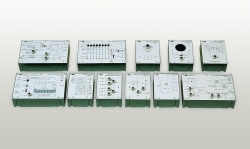
SCR TRAINER ED-5060

• SCR characteristics
• Rectifier and phase control
• Trigger and gate control
• Motor speed control


SQUIRREL CAGE INDUCTION MOTOR/ DC GENERATOR MG-5212

• Start and load characteristics of squirrel cage induction motor
• Alteration of the rotative directions of squirrel cage Induction Motor
• Slip speed and torque of induction motor
• Induction motor’s no-load power factor and load power facto


BLOCK MODULAR PRODUCTION SYSTEM ED-9150

• Small size type suitable for traning on automation system’s installation and operation
• Mechanism and installation methods through assembly and disassembly per process
• Enhancement of application programming techniques through PLC control


FLUID PROCESS CONTROL TRAINER ED-FPC

• Control of pressure, flow, level and temperature which are essential for process control
• Capable of stand-alone control and mixed combination in various types
• Real-time measurement and monitoring using data collection and signal conditioning
• Measurement of flow’s status and gain of the controlled data


MOTOR / GENERATOR TRAINER UNIT MG-5216

• RIM’s no-load power factor and load power factor
• Load characteristics of separately excited DC shunt-wound generator
• No-load saturation characteristics of generator
• DC shunt-wound generator’s loss and power factor