
Privacy policies
GDPR data Terms of use Cookies policy Privacy policy Delivery and Payment How to order?
Privacy policies
GDPR data Terms of use Cookies policy Privacy policy Delivery and Payment How to order?

Code: Promax TD-522
 Datasheet
 PDF, 0.11 Mb
Description
The TD-522 is a combiner to be assembled in a rack cabinet of 19 inches and 1U height. It is an instrument designed to combine different RF (COFDM) signals in DVB-T format. The system provides 46 dBm amplification and an output power of 130 dBµV (+22 dBm) which allows offair distribution in reduced areas.
The TD-522 can combine up to 4 RF input signals from different sources, such as DTT signals, CCTVs, modulators and more, distributing the combined RF output signal through the distribution network.
This is a solution of higher quality than those often used by Z connections, due to it preserves the original quality better and maintains lower noise levels.
|
|
From 50 MHz to 860 MHz |
|
MODULATION |
COFDM |
|
RF OUTPUT |
|
|
RF INPUT |
4 inputs |
Recommended options
More products PROMAX
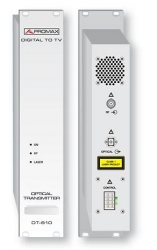
TRANSMITTER CONVERTER DVB-T -> OPTICAL FIBER PROMAX DT-610
• RF INPUT Frequency margin: From 470 to 862 MHz, From 50 to 1000 MHz(other options) |
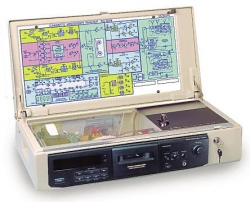
CASSETTE RECORDER TRAINING SYSTEM PROMAX EG-833
• Input section |
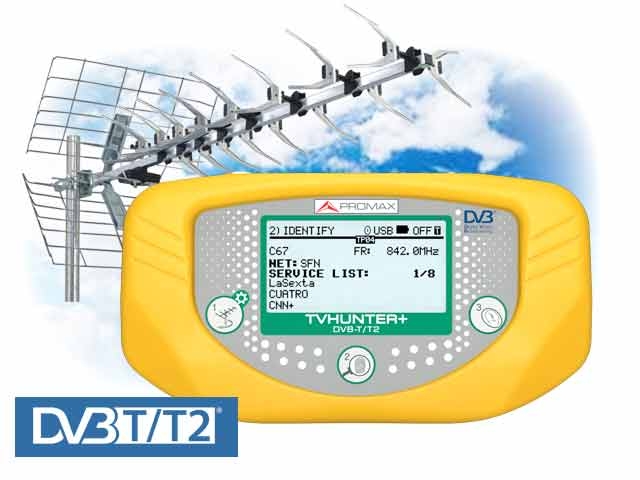
PROMAX TVHUNTER+ DIGITAL TERRESTRIAL TV HUNTER FOR DVB-T AND DVB-T2 SIGNALS
• Small handheld easy to use meter
|
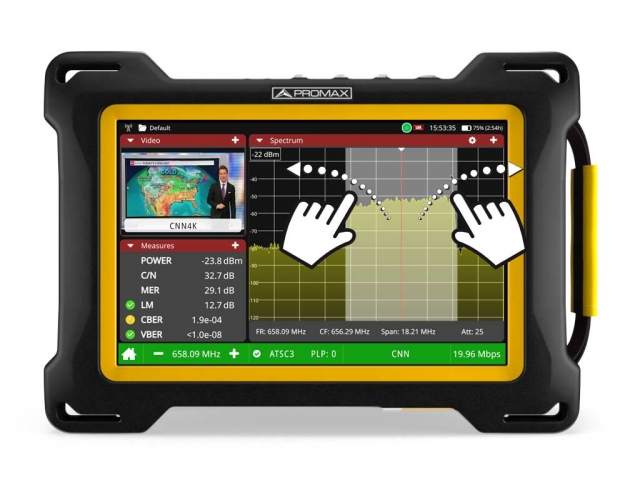
PROMAX ATLAS-IP MULTICAST AND UNICAST IPTV ANALYZER WITH SRT PROTOCOL SUPPORT
• ATLAS IP is a multicast and unicast IPTV analyzer, with SRT protocol support and optionally ST 2110
|
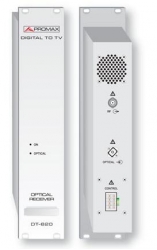
RECEIVER CONVERTER OPTICAL FIEBR -> DVB-T RF PROMAX DT-620
• OPTICAL INPUT: From 1100 to 1600 nm |
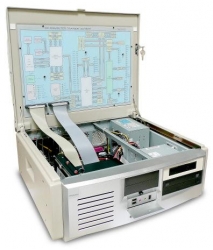
PC PERSONAL COMPUTER TRAINING SYSTEM PROMAX EO-865
• assembly, installation and configuration of all the components composing a multimedia PC |
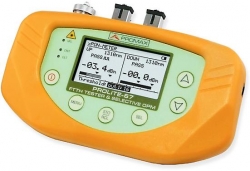
SELECTIVE OPTICAL FIBER POWER METER FTTX-XPON PROMAX PROLITE-67
• Attenuation test nd OLTS Functions |
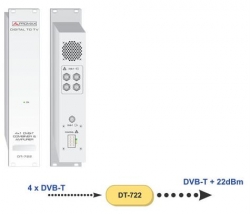
COMBINER 4 X DVB-T -> 1 X DVB-T PROMAX DT-722
• FREQUENCY MARGIN: From 50 MHz (C-2) to 860 MHz (C-69) |
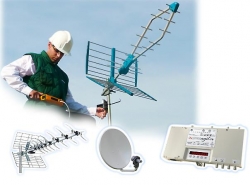
TRAINING SYSTEM FOR ANTENNA TRANSMISSIONS PROMAX EA-817B
• install, configure, adjust, modify and analyse any kind of actual MATV and SMATV installation |
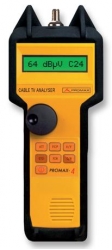
CATV CABLE NETWORK ANALYZER PROMAX-4
• measure the basic parameters to determine the quality of the signal in a CATV system |


