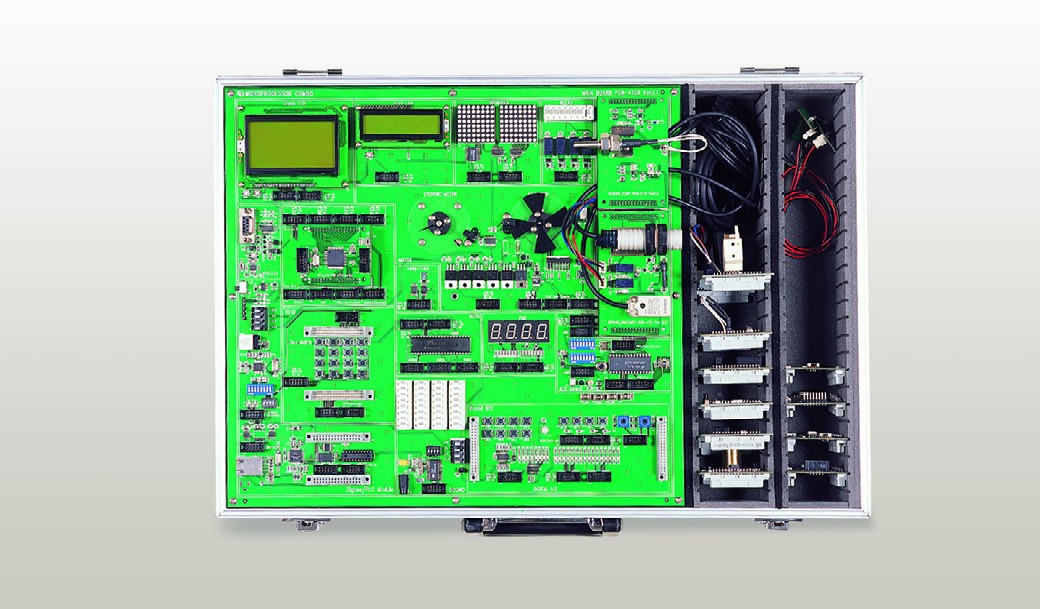
Microprocessor Combo ED-4512

Code: ED-4512


Datasheet PDF, 0.98 Mb

Description

EXPERIMENTS

MICROPROCESSOR

  • Digital I/O Control - Tact Switch, Toggle Switch, Relay Control, Key Matrix
  • Display Control - FND, Dot Matrix, TEXT LCD, Graphic LCD
  • Motor Control - DC Motor(24V), Steeping Motor(24V)
  • ADC/DAC Control - LM35, VR, CDS, Human Detection Sensor, DC Motor
  • Communication Control - RS-232, USB Ethernet Communication
  • TIME/Temperature - DS161620, DS1320
  • External EEPROM R/W - 2432, 9366(EEPROM) Read / Write
  • RFID / ZigBee / LonWorks(OPTION)


SENSOR

  • All sensor related experiments utilize the internal ADC and UART of each MCU(LabVIEW)
  • Optical Sensor
    • CdS, Photo Diode, Photo Transistor, Photo Interrupt, Photo Coupler, Pulse Diffused Sensor, Laser Diode, Color Sensor
  • Temperature Sensor
    • RTD Resistance Sensor, Thermocouple Sensor, Thermistor, IC, Temperature Switch Sensor
  • Magnetic Sensor
    • Hall IC(switching, linear type), Magnetic Reluctance(MR Elements), Reed Relay
  • Proximity Sensor
    • Inductive Sensor, Capacitive Sensor, Magnetic Sensor


SYSTEM CONFIGURATION

  • Main Board : 1ea
  • Microprocessor : 5ea (AT89C51ED2 : 1ea, ATMEGA128 : 1ea, PIC : 1ea, ATMEGA8535 : 1ea, uPD78F0547 : 1ea)
  • Sensor Module : 8ea (Optical Sensor : 4ea, Temperature Sensor : 2ea, Proximity Sensor : 1ea, Magnetic Sensor : 1ea)
  • LabVIEW
  • Option Modules : 3ea (RFID : 1ea, ZigBee : 1ea, LonWorks : 1ea)


Features:

  • Mountable 5 type of MCU(8051,PIC, Atmega128, Atmega8535, Upd78f0547)
  • Practice of various communications such as RS-232 USB and Ethernet
  • Practice from basic I/O exercises to sensor application exercises with 5 MCU’s
  • Possible of various practice by using of Bread Board and I/O Expansion Port
  • Storage of sensor data display and Excel data using UI(LabVIEW)
  • Practice of RFID(13.56MHz), ZigBee and LonWorks(option)
 

More products ED

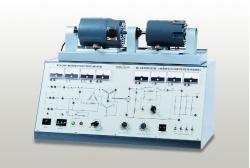
DC MOTOR/AC GENERATOR MG-5214

• DC motor’s load characteristics
• DC motor’s loss and efficiency
• Alteration of the motor’s rotative directions
• Motor’s speed and torque


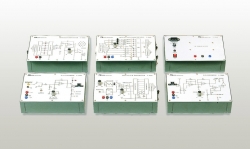
OP-AMP CIRCUIT TRAINER ED-6000

• OP-Amp. characteristics and various appplication circuits
• Main Frame contains DC Power Supply, AF Signal and Frequency Counter


LOGIC CIRCUIT LAB ED-1006

• Hexadecimal number indicators
• Selectable pulse outputs
• Built-in DC power supp


WOUND-ROTOR INDUCTION MOTOR/ DC GENERATOR MG-5213

• Load characteristics of shunt-wound and compound generators
• Generator’s speed and output by winding type
• Loss and efficiency comparisons by winding type


ALLEN-BRADLEY SLC-500 MODULAR PLC TRAINER ED-4260AB

• ALLEN-BRADLEY SLC-500 PLC programming and execution
• Modularization of the devices essential for PLC I/O commands
• Experiments for basic command and various application program
• Binary data experiments with 4digits digital switch and display unit
• Customizable for various types of SLC-500 Series CPU upon request


OPTICAL COMMUNICATION TRAINER ED-2980

• E/O and O/E conversion and characteristics
• Optical PCM communication(trasmission&reception)
• Optical Data communications using personal computer
• DC power supply, a roll of fiber cable and the microphone included as peripherals


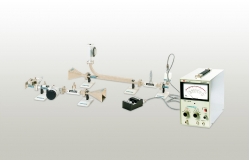
MICROWAVE TRAINER ED-3000

• Gunn Oscillator base system
• Directional Coupler & Horn Antenna
• Frequency : 9GHz~11GHz (X-Band)
• Microwave output : 15mV


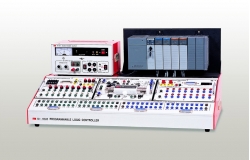
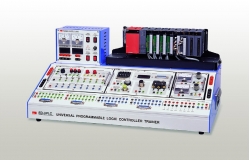
UNIVERSAL PLC TRAINER ED-UPLC

• Docking System architecture separating the main body from PLC modules
• Various types of Programmable Logic Controller experiments
• Modular structure for convenient storage and mobility
• Built-in multi connection device compatible with world’s famous PLC brands


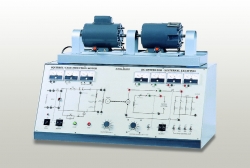
SQUIRREL CAGE INDUCTION MOTOR/ DC GENERATOR MG-5212

• Start and load characteristics of squirrel cage induction motor
• Alteration of the rotative directions of squirrel cage Induction Motor
• Slip speed and torque of induction motor
• Induction motor’s no-load power factor and load power facto


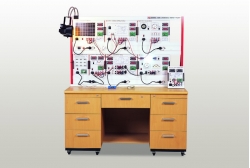
NEW & RENEWABLE ENERGY TRAINER ED-9710

• Conversion processing experiments on the produced energy(power production / processing)
• Energy efficiency experiments followed by energy production and conversion
• Voltage and current characteristics curve
• Standalone or integrated operation of the energy experimental module
• Enriched teaching aids such as simulation software for power production