
Privacy policies
GDPR data Terms of use Cookies policy Privacy policy Delivery and Payment How to order?
Privacy policies
GDPR data Terms of use Cookies policy Privacy policy Delivery and Payment How to order?

Code: testo 184 T1 0572 1841 01
 Datasheet
 PDF, 0.72 Mb
Description
The testo 184 T1 is an ideal logger for both pharmaceutical and food cold chain logistics. Configuration of the testo 184 short-term temperature logger is as simple as plugging into a USB port and customizing the included PDF file. With clear indication of configurable alarm settings, including measurement frequency, temperature range, and start and end times, ensuring proper cold chain transportation has never been easier. For international shipping, different languages can be independently configured for the recipient or shipper. Available in packs of 1, 10, or 50, configuring mutiple devices is as simple as drag and drop.
Features:
More products TESTO
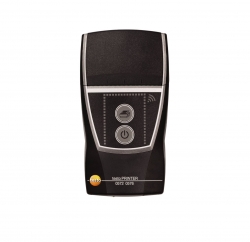
NFC THERMAL PRINTER FOR TESTO 184 LOGGERS
• NFC printer for testo 184 loggers, special USB cable for 175 and 176 loggers |
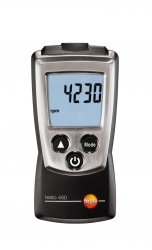
TESTO 460 - TACHOMETER
• Optical rpm measurements |
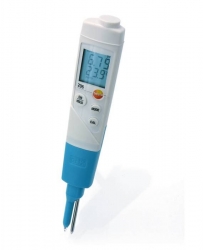
TESTO 206 PH2 - INSTRUMENT KIT
• pH2 probe head for semi-solid food |
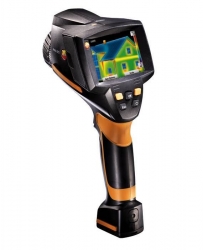
TESTO 875I-2 DELUXE KIT - ADJUSTABLE FOCUS THERMAL IMAGER (160 X 120 FPA)
• Thermal sensitivity to <50mK will show even minimal temperature differences |
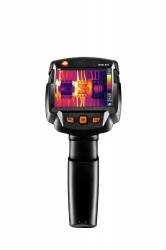
TESTO 871 - THERMAL IMAGER WITH APP
• Very good image quality: IR resolution of 240 x 180 pixels, via integrated testo SuperResolution Technology 480 x 360 pixels
|
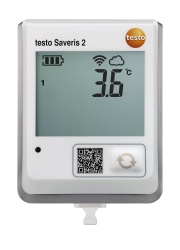
TESTO SAVERIS 2-T1 - WI-FI TEMPERATURE DATA LOGGER WITH INTERNAL NTC TEMPERATURE SENSOR
• Internal temperature NTC thermistor sensor |
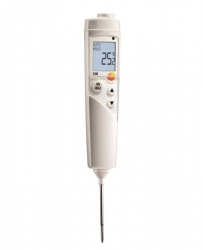
SET TESTO 106 - FOOD THERMOMETER KIT
• Ideal for measuring the core temperature of food: HACCP compliant / EN 13485 certified (when used with the TopSafe protective case) |
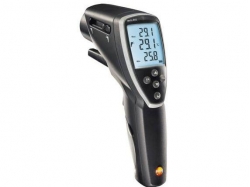
TESTO 845 WITH INTEGRATED HUMIDITY MODULE - INFRARED TEMPERATURE MEASURING INSTRUMENT WITH INTEGRATED HUMIDITY MODULE
• Switchable optics for far-field (75:1) and close-focus (1 mm, distance 70 mm) measurements |
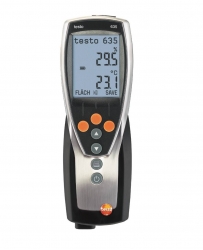
TESTO 635-1 - HUMIDITY MEASURING INSTRUMENT
• Probes available as an option mean you can measure air humidity, temperature, absolute pressure, and dew point in compressed air |
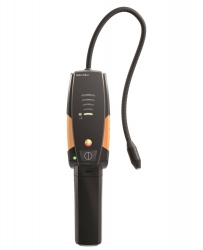
TESTO 316-3 REFRIGERANT LEAK DETECTOR
• Can detect all the most common cooling agents: CFCs, HFCs, FCs |


