
Privacy policies
GDPR data Terms of use Cookies policy Privacy policy Delivery and Payment How to order?
Privacy policies
GDPR data Terms of use Cookies policy Privacy policy Delivery and Payment How to order?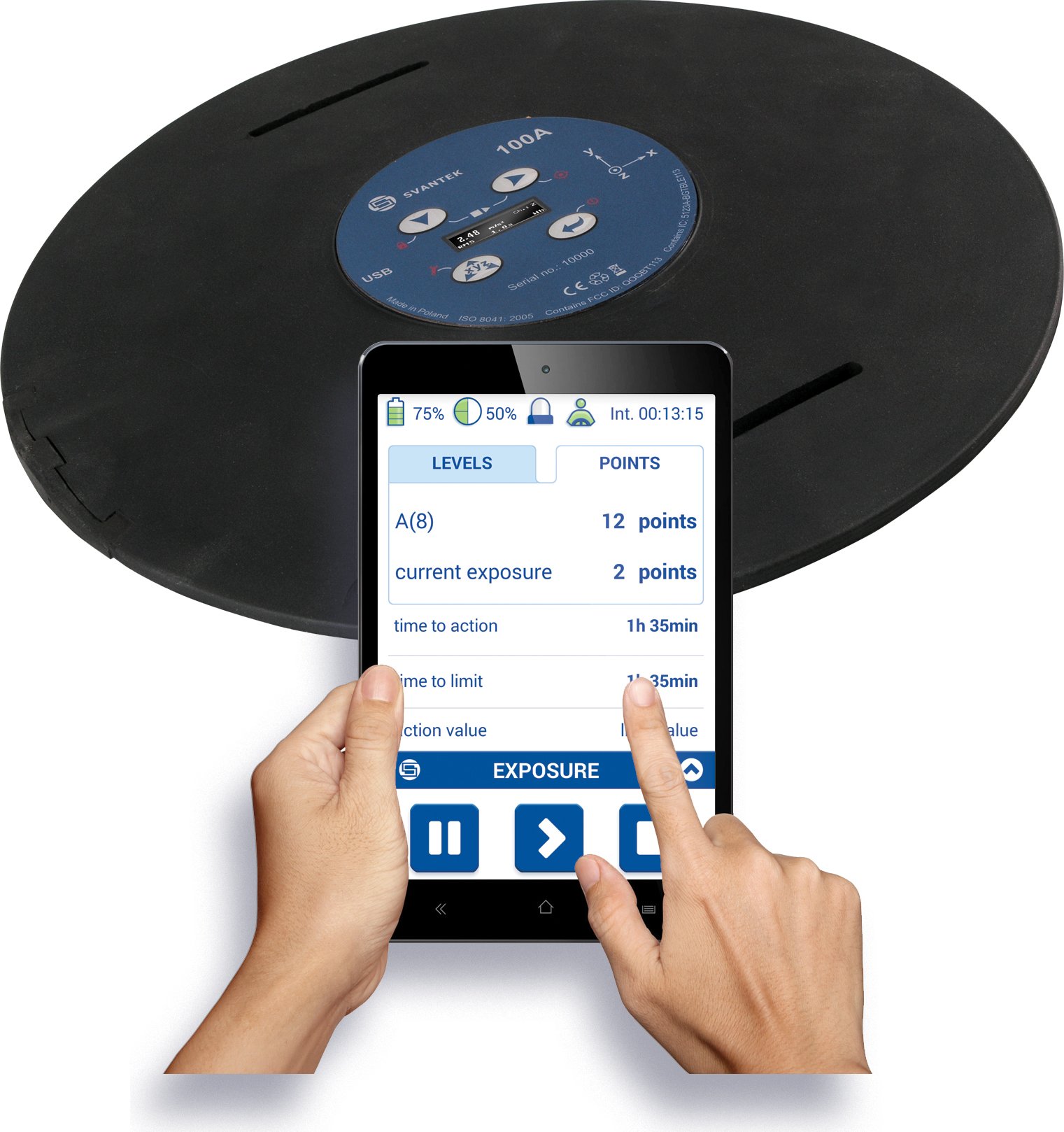

Description
The new SV100A is a wireless whole-body vibration exposure meter suitable for whole-body measurements in accordance with ISO 2631-1. Suitable for taking measurements both on the seat and seat-back, the device uses the very latest technology and is easy to use. The instrument is equipped with 4 push buttons and a small OLED display that allows basic configuration in the field.
The wireless BT communication interface enables current results to be previewed on a smartphone or tablet using our Assistant Android application.
The smartphone app can also signal an alarm when set vibration limits are exceeded. Our advanced technology enables the automatic detection of an operator in the workplace. By default the instrument is configured for seat measurements (in a horizontal direction) but this setting can be easily changed.
When changing the orientation of the SV 100A to the vertical, the directions of axes and weighting filters are automatically adjusted in accordance to ISO 2631-1.
The device is equipped with both RMS and RMQ detectors which allows the calculation of Daily Vibration Exposure A(8) based on RMS and VDV simultaneously. All measurement results are stored in a large 8GB internal memory which allows continuous recording over long periods. The standard 2.0 USB interface allows fast data download and is also used for battery recharging.
For advanced users, the SV 100A offers frequency analysis in 1/1 or 1/3 octaves and time signal recording to wave format in accordance to ISO 2631-5 that is compatible with popular recalculation software.
The SV 100A is fully configurable with our Supervisor software. It can quickly and easily be setup for all the weighting filters required by ISO standards for the estimation of the effects of vibration on health, comfort, perception and motion sickness. The dedicated Whole-Body Vibration Exposure panel within Supervisor software makes reporting extremely easy.
Features:
More products SVANTEK
SV 151 TRIAXIAL ACCELEROMETER
• Sensitivity (½ 5 %) 5.81 mV/ms-2 at 15.915 Hz
|
SVAN 958A FOUR CHANNELS SOUND & VIBRATION ANALYSER
• FFT cross spectra
|
SVAN 974 VIBRATION METER
• OLED colour display
|
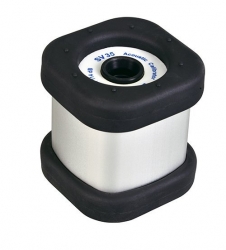
SV 36 CLASS 1 ACOUSTIC CALIBRATOR
• Ambient Temperature 23 °C
|
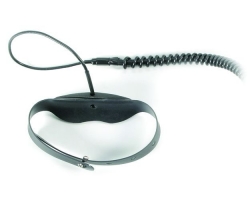
SV 105B TRIAXIAL HAND-ARM ACCELEROMETER
• Meets ISO 8041 and ISO 5349
|
SVAN 979 SOUND & VIBRATION ANALYSER
• Super contrast (10000:1) colour OLED display
|

SV 307 NOISE MONITORING TERMINAL
• Removable housing protecting the system against harsh environmental conditions (IP66)
|
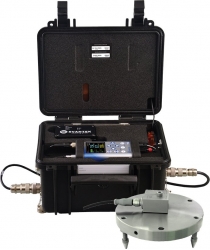
SV 258 PRO VIBRATION & NOISE MONITORING STATION
• 1/3 Octave PEAK, RMS or MAX analysis
|
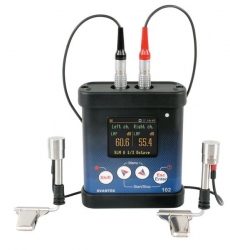
SV 102+ DUAL CHANNEL NOISE DOSIMETER
• Advanced data logger with audio-events-recording (option)
|
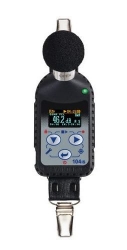
SV 104IS INTRINSICALLY SAFE NOISE DOSIMETER
• High contrast color OLED display
|






 Datasheet
  PDF, 5.25 Mb